
The short answer
Real oud (agarwood resin) smells dark, woody and resinous, with smoky, leathery, medicinal and slightly sweet facets, and sometimes a musty, animalic edge. Most perfume oud, including Lattafa’s, is an accord: a blend built to suggest that wood. So the oud you smell depends on what surrounds it: smoke, rose, caramel or fruit.
Ask ten people what oud smells like and you will get ten answers: incense, a cigar box, a hospital corridor, a farmyard, a jar of honey. They can all be right, because “oud” names a raw material, a perfumery style and, on some bottles, just a marketing word.
This guide separates them. First, what real agarwood is and why it smells the way it does. Then, what is actually inside a £12 to £20 bottle with “oud” on the label. Finally, a practical map of Lattafa’s oud styles by what your nose picks up, with one example of each, and a few notes on wearing it in British weather. Every note list quoted below was checked against Fragrantica in October 2026.
What is oud? The wood behind the word
Oud (Arabic ‘ud, wood) is the resin-soaked heartwood of Aquilaria trees, which grow across South and South-East Asia. Healthy Aquilaria wood is pale and has almost no smell. The fragrant material forms only when the tree is wounded or infected and floods the damaged area with a dark, oily resin to defend itself. Fragrantica’s agarwood entry calls it “a pathological secretion”, which is an unromantic but accurate description of how one of the world’s most prized perfume materials comes about.
That resinated wood is burned as chips (bakhoor and oud chips in a mabkhara) or distilled into oil, known as dehn al oud. Both have been central to fragrance across the Gulf, South Asia and East Asia for centuries.
So what does real agarwood smell like?
Fragrantica sums it up as a “rich, musty woody-nutty scent”. People who have smelled the oil usually describe several layers at once:
- Woody and resinous: the core. Dense and dark, closer to old furniture and tree bark than to fresh-cut pine.
- Smoky: especially when burned, but the oil also has a toasted, incense-like edge.
- Leathery and medicinal: a sharp, almost antiseptic note that some love and others find off-putting at first.
- Animalic or “barnyard”: a musty, earthy, faintly fermented quality, stronger in some oils than others.
- Sweet and honeyed: many oils turn soft, sweet and almost fruity in the dry-down.
The balance changes with the tree, the region, the age of the resin and how the oil was distilled, which is why oud connoisseurs talk about origins much as wine drinkers talk about vineyards.
Real agarwood vs the oud accord: what is in your bottle
Here is the honest bit, and our guide to Lattafa perfumes by note says the same: the oud in modern commercial fragrance is almost always a synthetic accord, not pure agarwood oil. Fragrantica’s own note page goes further and says that in commercial perfumery all “oud” is a recreated note. That applies to most designer and niche houses as well as to budget brands.
An oud accord is built from several materials that together suggest agarwood: dry woods, smoky and leathery notes, resins, and often a touch of something animalic. Perfumers can turn each part up or down, so an accord can be made smoky, clean, sweet or harsh. That is the reason two “oud” perfumes can smell nothing alike.
Synthetic is not a dirty word
An accord is not a fake. It is a design choice, and usually an economic one. Top-grade oud oil is among the most expensive materials in perfumery, its supply is limited, and its quality varies from batch to batch. An accord smells the same in every bottle, costs a fraction as much and lets the perfumer shape the effect. The better ones are excellent.
“Oud” on the label does not always mean oud in the notes
Lattafa uses the word freely in its names, so check the pyramid before you buy. The clearest example on our shelves is Bade’e Al Oud Honor & Glory. It takes its name from the Bade’e Al Oud line, but it is a pineapple and crème brûlée gourmand on sandalwood, vanilla and cashmeran. As our Honor & Glory review explains, neither Fragrantica nor Lattafa lists oud in it. It is a lovely dessert scent, but it will not show you what oud smells like.
The four Lattafa oud styles, sorted by what you smell
If you are trying to understand oud, the useful question is not “which is best” but “which oud is this?” Lattafa’s ouds fall into four broad styles. For each one we have picked a single in-stock bottle that shows the style clearly. Prices are at the time of writing, and every order ships free and tracked across the UK.
1. Smoky and medicinal: oud at its most direct
This is the oud people mean when they call it challenging. Saffron sharpens it, patchouli darkens it, and the effect is dry, smoky and a little metallic, with a medicinal edge in the first few minutes. The best-known Lattafa example is Bade’e Al Oud Oud for Glory. On Fragrantica it lists saffron, nutmeg and lavender over agarwood and patchouli, with agarwood, patchouli and musk in the base. Oud is its top-voted accord, ahead of warm spice and patchouli, and “metallic” and “leather” also appear. Reviewers often say the opening is harsh, then it settles into a smoother, darker wood. If you want to know what oud smells like with little softening, start here. Our Oud for Glory review follows its dry-down stage by stage.

2. Rosy: the classic Arabian pairing
Rose and oud have been worn together across the Middle East for generations, and the pairing works because each fixes the other’s weakness. Rose stops the oud from smelling harsh, and the oud stops the rose from smelling soapy or old-fashioned. Bade’e Al Oud Amethyst is a good way in: pink pepper and bergamot, then Turkish rose, Bulgarian rose and jasmine, over agarwood, amber and vanilla (Amethyst on Fragrantica). Voters rank rose first and oud second, so you smell the wood as a warm backdrop rather than a headline. Our Bade’e Al Oud range compared guide sets it against its three siblings, and our Amethyst review looks at how the rose and oud wear.

3. Sweet and resinous: oud wrapped in caramel and amber
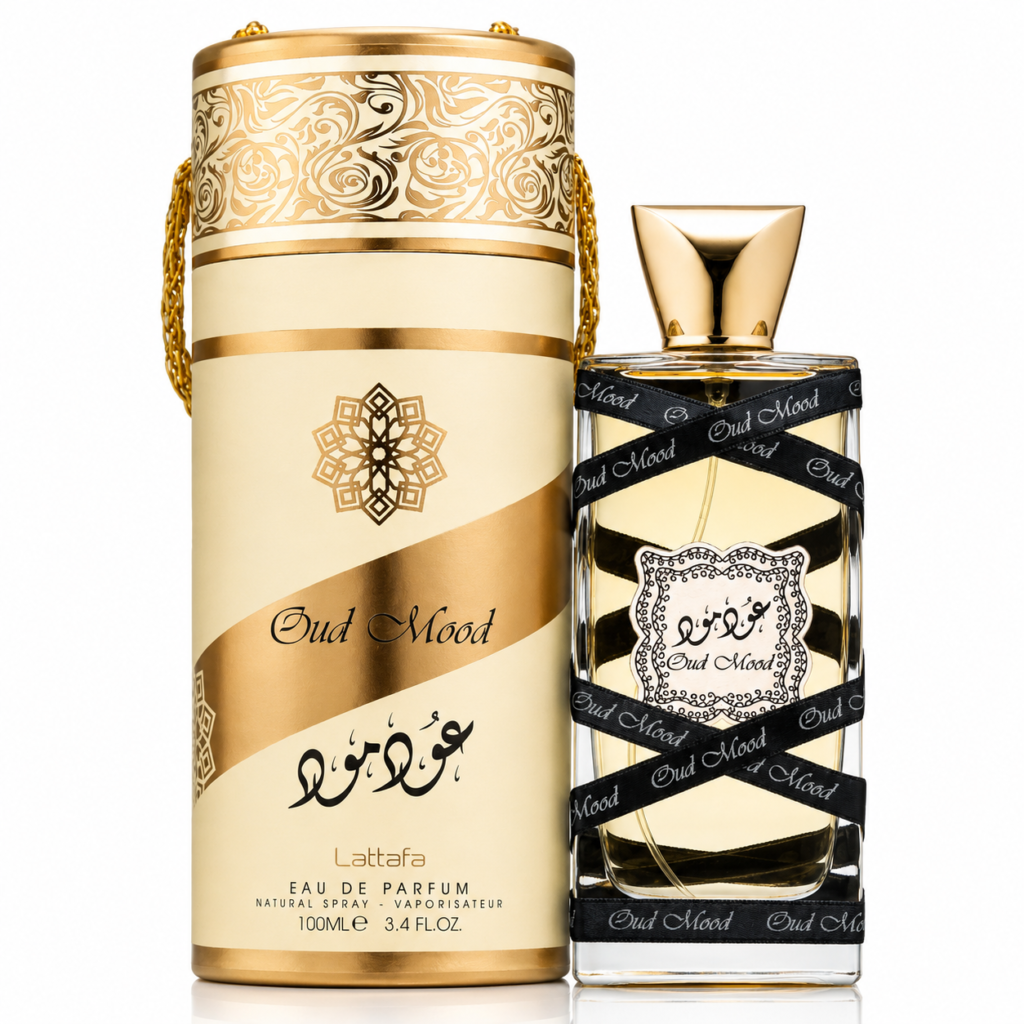
Sweetness is the easiest way to soften oud, and many modern Arabian perfumes use caramel, amber, vanilla or sugar to round off its edges. The wood is still there, but it reads as warm and cosy rather than smoky. Lattafa Oud Mood shows the style well. Fragrantica lists rose, saffron and pimento up top, agarwood, caramel, florals and patchouli in the heart, then woods, amber, incense, resins and musk. Its leading accords are amber, oud and woody, with caramel, balsamic and smoky further down. In short, it smells like oud with the lights dimmed and something sweet on the table.

4. Fruity: bright fruit on top, oud in the base
The lightest way to meet oud is to let fruit do the talking at first and save the wood for the dry-down. Lattafa Qaed Al Fursan opens on pineapple and saffron, moves through balsam fir and jasmine, and finishes on cedar, amber and agarwood (Qaed Al Fursan on Fragrantica). Fruity, sweet and woody are its strongest accords, and oud sits well down the list. That makes it a good “is oud for me?” test: you get the woody, slightly smoky finish without meeting the medicinal side head-on.

The four styles side by side
| What you smell | Example | What softens the oud | Price |
|---|---|---|---|
| Smoky, medicinal | Oud for Glory | Very little: saffron, patchouli, musk | £19.99 |
| Rosy | Amethyst | Two roses, jasmine, vanilla | £18.99 |
| Sweet, resinous | Oud Mood | Caramel, amber, resins | £15.99 |
| Fruity | Qaed Al Fursan | Pineapple, fir, amber | £11.99 (90ml) |
Ready to choose a bottle rather than learn the styles? Our best oud perfumes for women guide picks the rose, fruity and floral ouds, and our longest-lasting Lattafa perfumes ranking shows which bottles wearers say hold on longest.
Oud vs musk, amber and incense: telling them apart
Oud often shares a bottle with musk, amber and incense, and beginners tend to blur them together. A rough guide:
- Musk is soft, clean and skin-like, the “fresh laundry” or “warm skin” part of a perfume. Musk once came from the musk deer, but perfumery now uses synthetic musks. It sits close to the body, whereas oud has texture: woody, dry, sometimes sharp.
- Amber in perfumery is not a single material. It is a warm, sweet, resinous accord, usually built on labdanum, benzoin and vanilla. It is golden and cosy, while oud is darker and drier. Our guide to amber in perfume explains it in full.
- Incense (frankincense, or olibanum) is smoky too, but its smoke is bright, peppery and slightly citrusy, the smell of a church. Oud’s smoke is heavier and woodier.
How to wear oud year-round in UK weather
Britain’s mild, damp climate is kinder to oud than the Gulf heat it is often worn in, but the season still changes how it behaves:
- Autumn and winter: the natural home for the smoky and sweet styles. Cold air slows evaporation, so dense ouds such as Oud for Glory and Oud Mood come across as smooth rather than loud. A spray on a wool scarf or coat collar keeps the scent with you, since fabric holds oud well. For more cold-weather picks, see our best Lattafa perfumes for autumn.
- Spring: try the rose and fruit styles. Amethyst’s rose and Qaed Al Fursan’s pineapple lift the wood, so they suit a showery April day without feeling heavy.
- Summer: warmth makes oud project harder, so use less. One spray of a rosy or fruity oud, applied to clothing rather than hot skin, is usually enough. If you would rather leave oud alone in July, that is fine too: it will be at its best again in October.
- Office and public transport: whatever the season, an enclosed carriage or meeting room magnifies oud. Use one spray, keep it under clothing, and save the bolder styles for evenings. Our best Lattafa perfumes for the office lists quieter options for the working day.
- Give a new bottle time: wearers often say oud-heavy perfumes smooth out after a few weeks’ rest in a cool, dark cupboard. Judge it after the first 15 to 30 minutes, not on the first sniff. Our maceration guide explains why resting helps.
A question we hear often from UK customers is whether oud perfume is halal. That depends on the alcohol base rather than the oud, and our halal fragrances guide covers it.
Oud questions, answered
Quick answers to the questions UK shoppers ask most.
Why is oud so expensive?
Real agarwood forms only when an Aquilaria tree is wounded or infected and slowly fills with resin, often over many years. Wild trees with good resin are scarce, Aquilaria species are protected under CITES trade controls, and distilling oil takes a lot of wood for a small yield. That is why pure oud oil is so costly, and why most perfumes, at every price, use an oud accord instead.
What is the difference between real oud and synthetic oud?
Real oud is oil distilled from resinated agarwood. It is complex, varies by origin and batch, and costs a great deal. Synthetic oud is an accord: a blend of woody, smoky, leathery and resinous materials designed to suggest agarwood. It smells the same in every bottle and can be tuned smoky, sweet or clean. Fragrantica notes that commercial “oud” is generally recreated, and at Lattafa’s prices the oud is almost certainly an accord too.
What is the difference between oud and musk?
They do opposite jobs. Musk is soft, clean and skin-like and sits close to the body. Today it is almost always synthetic, though it originally came from the musk deer. Oud is a wood: dark, dry and textured, often smoky or leathery. Many Arabian perfumes use both, with oud for depth and musk to smooth the edges, as in Oud for Glory’s base.
Why does some oud smell medicinal or like a farmyard?
Real agarwood has naturally sharp, antiseptic and musty animalic facets, and many oud accords copy them on purpose to seem authentic. In smoky styles such as Oud for Glory, reviewers often notice it in the first few minutes, and it usually softens as the perfume settles. If that edge puts you off, try a rose, sweet or fruity oud, where other notes cover it.
Does every perfume with “oud” in its name contain oud?
No. The word often names a collection or a mood rather than a note. Bade’e Al Oud Honor & Glory, for example, is a pineapple crème brûlée gourmand, and neither Fragrantica nor Lattafa lists agarwood in it. Before you buy, check the note pyramid on Fragrantica or on the brand’s own listing, and look for “agarwood” or “oud” in the heart or base notes.
Can you wear oud in a British summer?
Yes, with a lighter hand. Heat makes oud project more, so choose a rosy or fruity style such as Amethyst or Qaed Al Fursan, use one spray, and put it on clothing rather than hot skin. Save the smoky and caramel styles for cooler evenings. On truly hot days, many people switch to a fresh scent and come back to oud in autumn.
Written by Shaheen Shah Abrar, Founder of Royal Scents. Notes checked against Fragrantica and lattafa.com.